Most brides walk into their first consultation with a silhouette in mind. Very few walk in thinking about fabric. But the fabric is often what makes the difference between a gown that photographs well and one that doesn’t. Between a dress that holds its shape across a twelve-hour day and one that starts to wilt after the ceremony. Between a bride who feels like herself and one who feels like she’s wearing someone else’s idea of a bride.
Here is a working guide to the fabrics you’ll encounter while shopping, with notes on how each one photographs, drapes, and behaves in real life. After forty years of constructing, altering, and restoring wedding gowns at Margo West, these are the observations we find ourselves repeating to almost every bride who asks.
Silk and Its Many Forms
When people say “silk” they often mean several different fabrics. Silk is a fiber, not a weave. The character of a silk gown depends almost entirely on how that fiber has been woven, finished, and blended. A few you’ll encounter:
Silk Mikado
A heavier silk blend with a slight sheen and excellent structure. Mikado holds architectural silhouettes beautifully. Sharp necklines, sculpted bodices, and structured skirts all work in mikado. It photographs with warmth and depth without looking glossy. If you want a modern, clean silhouette with some weight behind it, mikado is often the right answer.
Silk Duchess Satin
The most formal bridal fabric in common use. Duchess satin has a smooth, lustrous face and substantial weight. It is the fabric you see on ballgowns in major bridal magazines. It photographs dramatically, but it also reveals every underlying imperfection because it does not forgive or drape. Duchess satin suits brides who want a formal, commanding silhouette and are comfortable with a fabric that requires careful fitting.
Silk Charmeuse
The softer, more fluid cousin of duchess satin. Charmeuse drapes effortlessly and moves with the body. It photographs softly and is often used for bias-cut slip silhouettes. Brides who love the languid, old-Hollywood aesthetic often end up in charmeuse.
Silk Organza
Crisp, sheer, and lightly structured. Organza is often used as an overlay to add dimension and volume without adding weight. It photographs with a subtle shimmer and holds pleats and gathers beautifully. A silk organza skirt catches light in a way synthetic organza cannot match.
Tulle
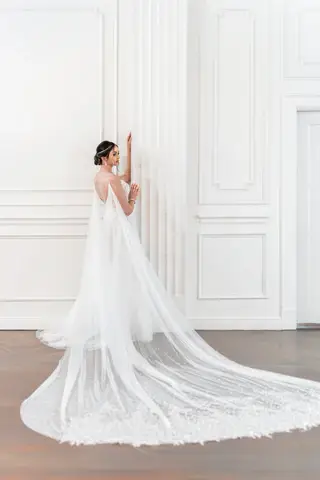
Tulle is the fabric most commonly associated with bridal illusion, veils, and ballgown skirts. It comes in a range of weights, from extremely fine bridal illusion to heavier English tulle with more body. Tulle is where many brides discover that quality matters more than they realized. Cheap polyester tulle reads as cheap on camera. Fine silk tulle, or high-grade nylon bridal illusion, photographs softly and convincingly.
Tulle layered over satin is one of the oldest and most reliable bridal combinations. The tulle softens the sheen of the satin underneath, and the satin gives the skirt body the tulle could never create alone.

Lace
Lace is its own category, and a deep one. The major distinctions to understand:
Chantilly Lace
Delicate, floral, and usually used as an overlay or trim. Chantilly has a distinctive net ground with embroidered floral motifs. It photographs softly and romantically. Heavy Chantilly works year-round; delicate Chantilly reads as spring or summer.
Alençon Lace
Heavier and more dimensional than Chantilly, with raised embroidery on a fine net. Alençon has visible texture even in photographs and is often used for statement bodices, sleeves, and appliqués. It handles movement well and looks equally appropriate in a cathedral ceremony or an outdoor venue.
Guipure (Venise) Lace
Bold, graphic, and made without a net ground. The motifs are connected directly to each other with thread bridges. Guipure photographs boldly and reads as modern or fashion-forward. It is not a traditional bridal lace, but it creates striking silhouettes for brides who want something less expected.
Corded and Beaded Lace
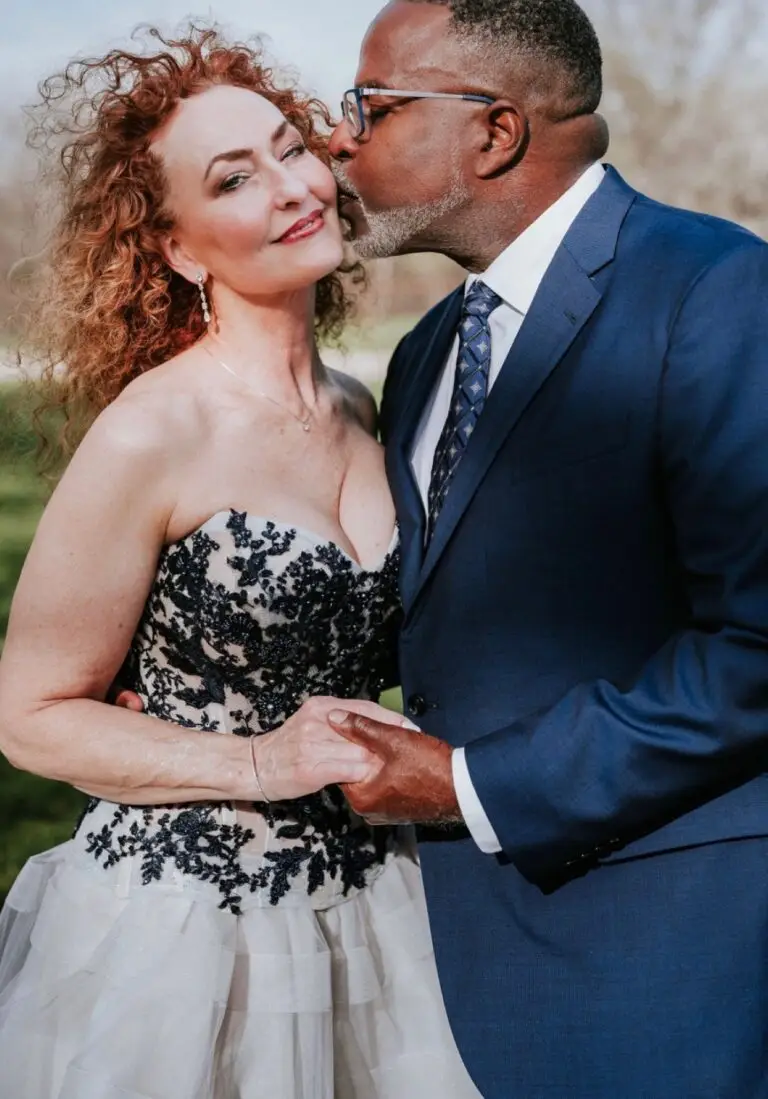
Any of the above laces can be corded (outlined with thicker thread) or beaded (embellished with seed beads, pearls, or sequins). Beaded lace shifts a gown from elegant to formal quickly. A little goes a long way on camera.
Crepe
Underrated and increasingly popular. Crepe has a subtle matte finish and a slight surface texture that reads as modern rather than traditional. It drapes beautifully and is one of the most body-flattering bridal fabrics because it skims without clinging. Crepe gowns photograph with a quiet elegance that holds up in almost any setting.
Silk crepe is the premium version; crepe de chine and polyester crepes are more accessible and still look excellent. For a Dallas summer or a destination ceremony, crepe is worth strong consideration.
Satin (Synthetic)
Not all satin is silk. Polyester and blended satins are common in bridal and are not, by themselves, a problem. The question is which kind of polyester satin. High-quality synthetic satin is woven densely and finished to mimic silk. It photographs well, wears well, and costs far less than silk. Lower-quality polyester satin has a plastic sheen that is difficult to hide in photographs. A good consultant or couturier can tell the difference immediately.
Mesh, Illusion, and Tulle Overlays
Illusion fabric is the fine, nearly invisible mesh used for sheer necklines, back details, long sleeves, and strategic cover. Good illusion essentially disappears in photographs; cheap illusion shows up as a distracting beige panel. If your gown has illusion anywhere, the quality of that mesh is critical. It is also one of the easiest upgrades to make during alterations. We wrote a full guide to illusion sleeves here.
“Brides ask me about silhouette first and fabric almost last. I tell them: the silhouette is the decision you make today, but the fabric is the decision you’ll see in every photograph for the rest of your life.”
Which Fabric Is Right for You?
There is no single answer. A few questions that help narrow it down:
- Where is your ceremony? Indoor, outdoor, hot, cool?
- What time of year are you marrying?
- What silhouette do you love? Structured or fluid?
- How do you want the gown to photograph. Soft and romantic, or sharp and architectural?
- How much movement do you want in the skirt?
- Is the gown traveling? Some fabrics wrinkle more easily than others.
The answers to those questions matter more than any list of fabric names. Brides who choose their fabric based on fit and feel almost always look back at their photos and see themselves. Brides who choose based on trend often don’t.
Working with Your Fabric at Margo West
Every gown we build, alter, or transform at Margo West begins with a fabric conversation. If you already have a dress and the fabric is not quite right, we can often shift the impression significantly through overlays, linings, and strategic design additions. Design additions are one of our most-requested services precisely because they give brides control over how a gown reads without rebuilding from scratch.
If you are still shopping for a gown, bring your fabric questions to your consultation. We are always happy to tell you what you’re actually looking at when you see a dress labeled “silk” or “lace.” Call us at (972) 918-9750 or book a consultation online.